About Nuclear Atlas
The people, sources, and checks behind the atlas.
Public sources. Traceable evidence.
Nuclear Atlas turns public nuclear records into a reviewed, dated snapshot of the industry. Follow published records back to their evidence. A separate local archive preserves imported data so the original files can be reproduced.
Regulators
Licenses, inspections, public notices
Government datasets
Reactors, fuel, waste, and operations
Company filings
Project announcements and disclosures
Review evidence
Sources, dates,
and facility match
Approve a snapshot
Validated release
and public downloads
Explore Nuclear Atlas
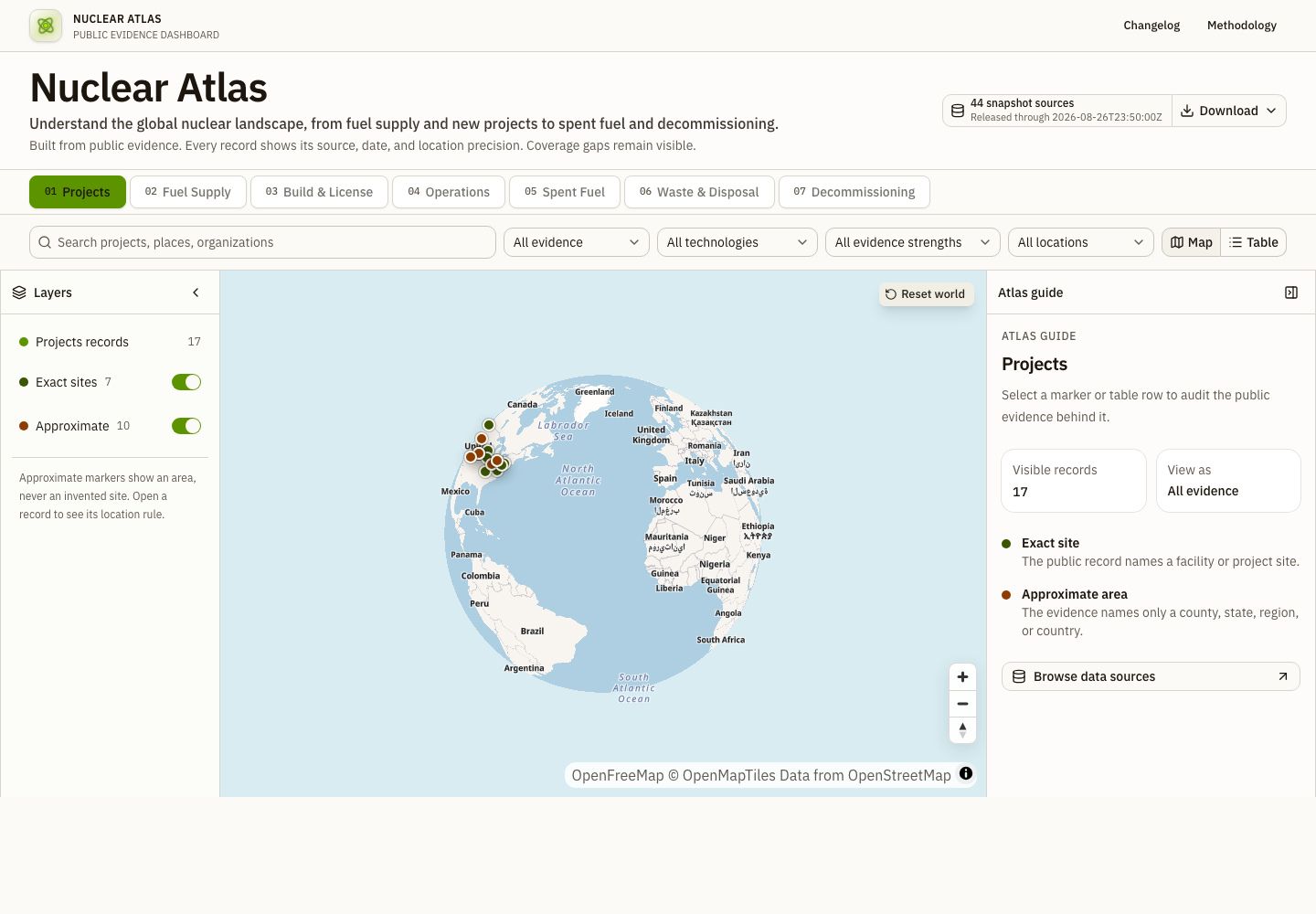
The published map, table, and evidence
Also accepts
prepared source JSON
or the ADAMS API pilot
Local archive
SQLite + original JSON files
The ADAMS pilot runs on demand and writes directly to this local archive. Publication requires a separate evidence review and authorized release.
- Public sources
- Reviewed workbook
- Approved release
- Nuclear Atlas
Baseline snapshot: August 26, 2026 · Targeted updates
Five licensing records were reviewed on September 15, 2026. Other records retain their earlier evidence dates. Sources update at different speeds; this is not a live feed.
Storage and downloads
Simple storage, reviewed releases
Local SQLite keeps imported records and collection history. Original JSON snapshots sit beside it. Google Sheets and the reviewed workbook remain the authoring layer; the website serves static files.
The on-demand ADAMS pilot writes metadata and raw responses to the local archive. Scheduled collectors remain separate. Off-device backups and long-term retention still need decisions.